E-commerce · 2023
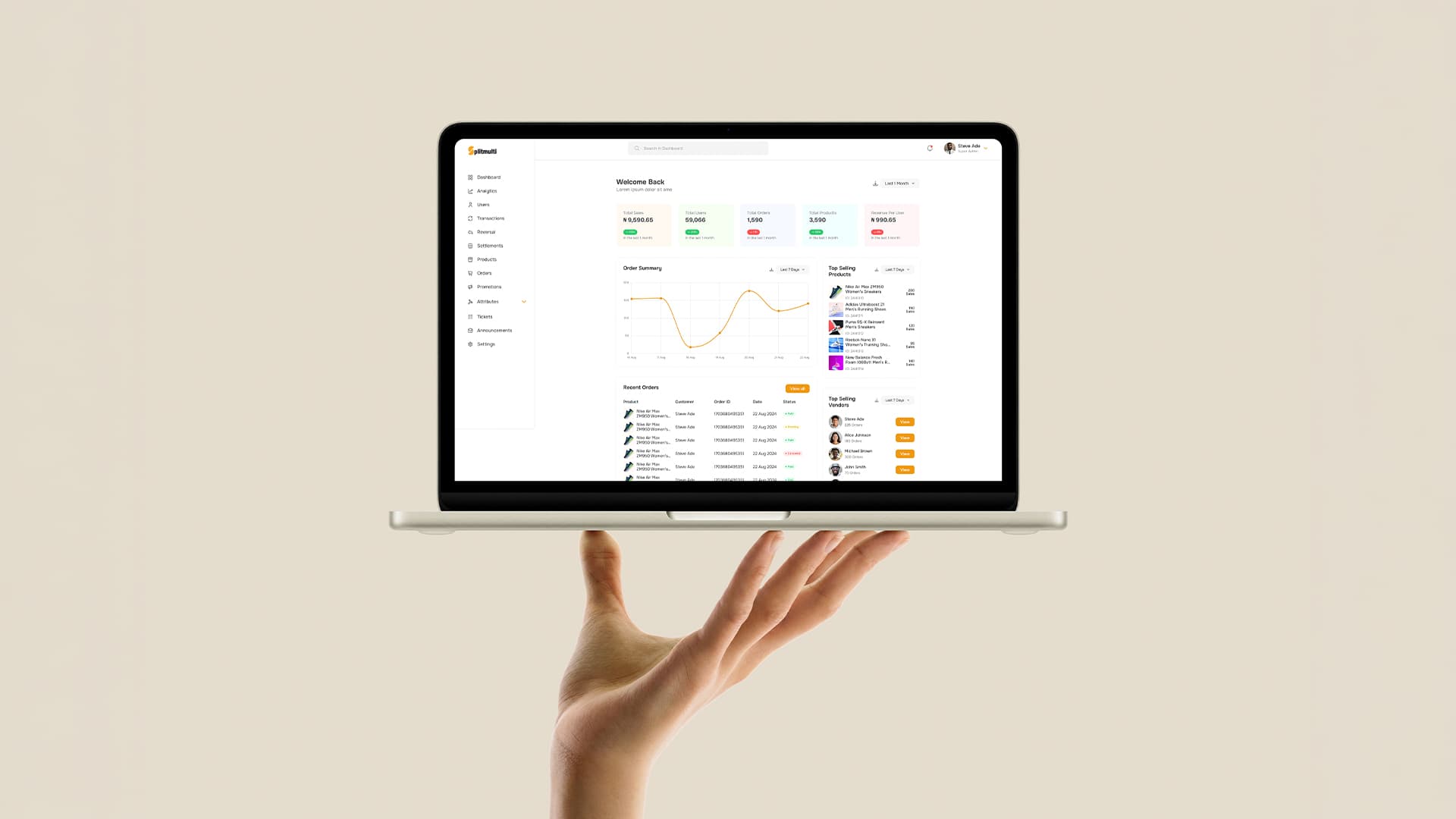
SplitMulti Vendor Dashboard
Transforming a complex split-purchase marketplace into a simple day-to-day workflow for vendors.
Company
Sage Grey Group
Role
Senior Product Designer
Year
2023
Platform
Web Dashboard
Category
E-commerce
Overview
Most e-commerce platforms are built around certainty.
A customer places an order, the vendor gets paid, and the product gets delivered.
SplitMulti introduced a different model.
Products could be sold as Split Products, where multiple buyers collectively contribute towards a purchase target. If the required number of buyers wasn't reached within a specified timeframe, the transaction would not proceed and buyers would be refunded.
While this created a more accessible purchasing model for customers, it introduced a new operational challenge for vendors.
How do you help vendors confidently manage products, fulfillment, and revenue when transactions are no longer guaranteed?
My role was to design the vendor dashboard powering this entire experience.
Building a Vendor Operating System
Rather than treating the dashboard as a collection of pages, I approached it as an operating system for merchants.
The experience was organised around six core areas:
Product Management
Order Management
Wallet & Transactions
Promotions
Support Tickets
Account Settings
This gave vendors a single place to manage their business from product creation to fulfilment and revenue tracking.
Making Product Creation Scalable
Creating a product on SplitMulti involved more than entering a title and price.
Vendors needed to configure product information, variants, shipping details, and in some cases, Split purchasing requirements.
To reduce complexity, the experience was broken into focused sections rather than a single overwhelming form. This allowed vendors to move through the setup process naturally while supporting both regular and Split products within the same flow.
Designing for Conditional Orders
The most complex part of the platform was order management.
Unlike traditional marketplaces, orders moved through multiple states before completion. Vendors needed immediate clarity on what stage an order was in, what action was required next, and whether fulfilment was progressing successfully.
Instead of hiding this complexity, the interface surfaced it through clear status indicators and contextual actions.
The goal was simple: remove guesswork from fulfillment.
Building Trust Into Fulfilment
One of the more deliberate additions to the experience was shipment verification.
Before an order could be completed, vendors were required to upload a package video as proof of fulfilment. This created a transparent record of what was shipped and helped reduce disputes between buyers and sellers.
What could have become a support issue was solved through product design.
Giving Vendors Financial Clarity
Because Split purchases could succeed or fail depending on participation, financial visibility became critical.
The wallet experience was designed to provide a clear separation between business activity and available funds.
Vendors could:
Monitor earnings
Review transaction history
Track payment status
Request withdrawals
This helped answer one of the most important questions on the platform:
"How much money is actually available to me right now?"
Supporting Growth Beyond Sales
The dashboard also included tools that extended beyond day-to-day operations.
Promotions helped vendors increase visibility within the marketplace, while the ticketing system provided a structured channel for support and issue resolution.
Together, these features ensured vendors could manage, grow, and support their business without leaving the platform.
Outcome
The final dashboard provided vendors with a structured way to operate within a marketplace built around conditional commerce.
By making product setup clearer, order states more visible, fulfilment more accountable, and finances easier to understand, the experience transformed a complex business model into a manageable daily workflow.
Good dashboard design isn't about showing more information. It's about helping users understand what matters right now.